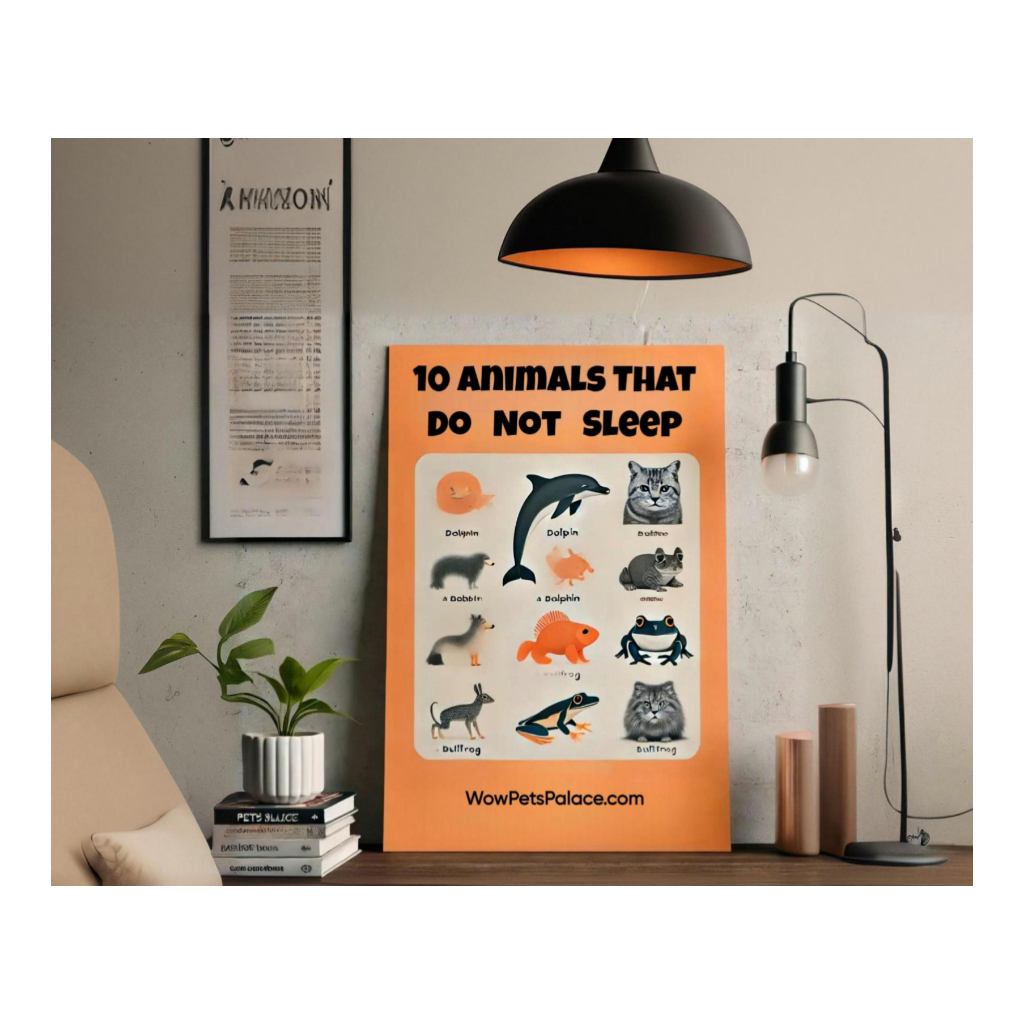
10 Animals That Do Not Sleep: Nature’s Most Restless Creatures
Sleep is essential for most animals, helping them restore energy, maintain bodily functions, and process information. Yet, in the vast and diverse animal kingdom, some creatures defy this universal need. Whether due to evolutionary adaptations or environmental necessities, these animals have found ways to survive on minimal or no sleep. In this article, we’ll dive into the fascinating world of non-sleeping animals, sharing surprising facts, scientific insights, and the reasons behind their unusual behavior.
If you're fascinated by unique animal facts and looking to learn more about curious creatures, check out WowPetsPalace.com for more intriguing articles and resources about the animal kingdom.
1. Dolphins – The Half-Sleepers:
Dolphins are renowned for their unique sleep method, known as unihemispheric slow-wave sleep. Unlike humans, dolphins sleep with only one half of their brain at a time. The other half remains awake to help them swim, breathe, and stay vigilant for predators. This adaptation allows dolphins to stay alert and alive in a dangerous marine environment. Dolphins can continue swimming for extended periods without full sleep, relying on this split-brain strategy.
Did you know? Dolphins are part of the cetacean family, which includes whales, and many of these animals exhibit similar sleep behaviors.
2. Bullfrogs – Always Alert:
Bullfrogs, a species of amphibian, are often cited as an example of animals that do not experience true sleep. Although they have rest periods, they remain responsive to environmental changes even while resting. This means that they can respond to threats or changes in their surroundings without fully shutting down.
Interesting Fact: Bullfrogs are a subject of scientific debate because researchers are still studying whether their rest states qualify as sleep. This ongoing research is helping us learn more about the basic requirements of sleep in various species.
3. Alpine Swifts – Flying for Months:
The Alpine swift is a migratory bird that spends an incredible amount of time in the air—sometimes up to 200 days without landing. These birds are capable of sleeping mid-flight using unihemispheric sleep, similar to dolphins. By resting one hemisphere of their brain at a time, Alpine swifts can conserve energy during long migrations and stay safe in the sky.
Fun Fact: Alpine swifts migrate between Europe and Africa, covering thousands of miles without a single pitstop. Learn more about other migratory birds on WowPetsPalace.com, your go-to site for fascinating animal stories.
4. Elephants – Giant Sleep Minimalists:
Elephants sleep for only about two hours a day in the wild, often standing up. When they do lie down to sleep, they’re usually in safe environments where they feel protected from predators. Elephants’ minimal sleep requirements may be due to their size and need for constant foraging.
Surprising Fact: In captivity, elephants sleep a little more, around 4-6 hours a day, but in the wild, they are often on the move and vigilant, which reduces their sleep time significantly.
5. Walruses – Restless Giants of the Sea:
Walruses are known for their incredible endurance and adaptability. They can stay awake and active for up to 84 hours straight while swimming or foraging. Once on land, they compensate with extended rest periods, sometimes sleeping for more than 19 hours at a time.
Did You Know? Walruses have thick skin and layers of blubber, allowing them to sleep comfortably on cold, rocky shores without needing to retreat to sheltered areas.
6. Giraffes – Power Nappers on the Savanna:
Giraffes are among the lightest sleepers in the animal world, typically sleeping for only four to five hours a day in brief naps. They often sleep standing up to stay alert to predators, though they sometimes lie down for a deeper rest.
Quick Fact: Due to their height, giraffes are vulnerable to attacks from predators when lying down, so they’ve evolved to take power naps while standing. This adaptation helps them stay safe in the wild.
7. Horses – Standing Sleepers:
Horses are animals that primarily sleep standing up, thanks to a unique anatomical feature called the stay apparatus in their legs. This mechanism allows them to “lock” their legs in place, preventing them from collapsing while they take light naps. Horses sleep only for a few hours each day, with their deepest sleep occurring only when they feel secure enough to lie down.
Interesting Fact: Horses usually sleep in short bursts of around 15 minutes each, accumulating their total daily rest in short intervals. WowPetsPalace.com has more articles on unique animal behaviors like these.
8. Fruit Flies – Tiny Creatures, Tiny Naps:
Fruit flies, despite their small size, have surprisingly complex sleep patterns. Instead of sleeping for long periods, they take hundreds of micro-naps throughout the day. These naps are brief but add up to a few hours of sleep per day.
Did You Know? Fruit flies have been used extensively in sleep research because their short life cycle allows scientists to study generations quickly. Their sleep patterns provide insights into the basic needs for rest in animal life.
9. Sharks – Resting on the Move:
Certain species of sharks, such as the great white shark, do not experience sleep as we know it. Sharks must keep moving to breathe, as their gills require a continuous flow of water to extract oxygen. Instead of sleeping, they enter low-activity periods that conserve energy without fully stopping movement.
Fun Fact: Some sharks, like the nurse shark, can remain still and still breathe because they use a different respiratory method. Learn more about the fascinating adaptations of marine animals at WowPetsPalace.com.
10. Ants – Tiny Workers, Tiny Breaks:
Ants don’t sleep in long blocks like humans. Instead, they take hundreds of short “power naps” throughout the day, lasting just a few minutes. These naps add up to only a few hours of sleep per day. This unique sleep pattern allows ants to stay active nearly around the clock, which is essential for their highly organized colony life.
Quick Fact: In a single day, an ant might take up to 250 naps, ensuring they’re always ready to contribute to the colony's work. You can explore more about insect behaviors and fascinating colony life on WowPetsPalace.com.
Why Do Some Animals Not Sleep?
The animals on this list exhibit minimal or unique sleep patterns for several reasons. For some, like dolphins and Alpine swifts, staying alert is essential for survival, allowing them to avoid predators or continue migration. For others, like elephants and giraffes, sleep is kept to a minimum due to constant movement and foraging needs. In environments where safety, foraging, or social structure demand constant vigilance, animals evolve these adaptations to thrive without traditional sleep.
The Importance of Sleep in the Animal Kingdom:
Although these animals have adapted to minimal sleep, scientists are still studying the effects and necessity of sleep in different species. Understanding how and why animals like dolphins and elephants survive on limited rest provides insights into the evolutionary importance of sleep and how it may vary depending on an animal’s habitat and lifestyle.